
Pay Stub Review
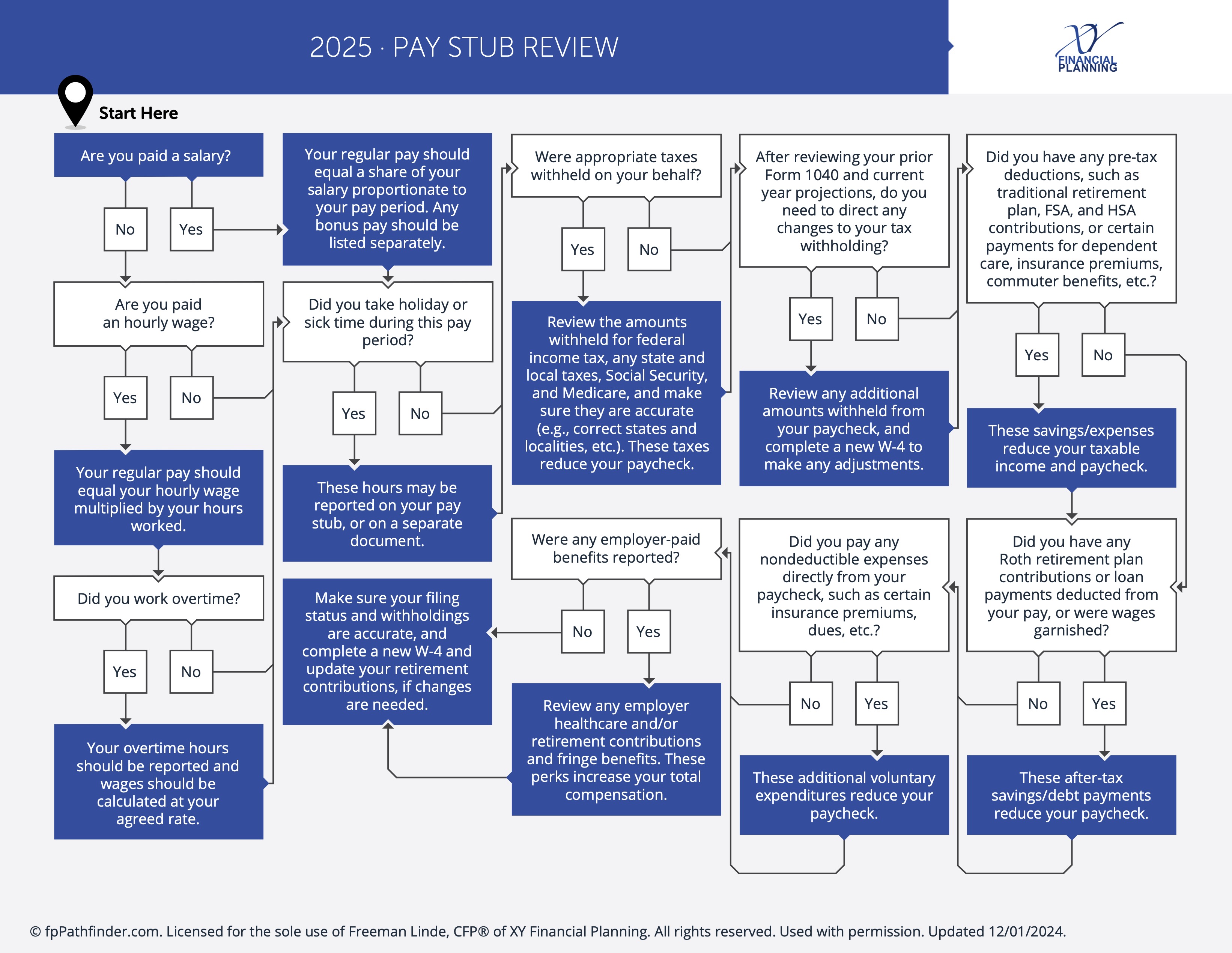
Pay Stub Review. This flowchart will walk you through reviewing pay stubs.
Pay stubs, often overlooked yet essential documents, provide detailed information about your earnings and deductions. Understanding pay stubs can help you track your income, taxes, and deductions accurately.
Pay Stub Information
- Earnings Information: Pay stubs typically detail your gross earnings, representing the total amount earned before deductions. This section also breaks down your earnings by hours worked, rate of pay, and any overtime or bonuses.
- Taxes Withheld: One crucial aspect of pay stubs is that they provide information about taxes withheld from your paycheck. This includes federal income tax, state income tax (if applicable), Social Security tax, and Medicare tax. Understanding how much tax is being withheld can help you plan for your tax liability.
- Deductions: Pay stubs also detail any deductions taken from your paycheck. This may include contributions to retirement accounts, health insurance premiums, and other voluntary deductions. Knowing your deductions can help you understand your overall financial picture and make informed decisions about your finances.
- Net Pay: Net pay, also known as take-home pay, is the amount you receive after all deductions have been subtracted from your gross earnings. It’s important to review your net pay to ensure it matches your expectations and to catch any errors or discrepancies.
- Year-to-Date Information: Pay stubs often include year-to-date (YTD) information, which shows your earnings and deductions from the beginning of the year to the current pay period. Reviewing YTD information can help you track your income and taxes throughout the year.
- Employer Information: Pay stubs typically include information about your employer, such as the company name, address, and employer identification number (EIN). This information is essential for tax purposes and can also be useful for verifying your employment.
- Keeping Records: It’s essential to keep your pay stubs for your records, especially for tax purposes. Pay stubs serve as documentation of your income and taxes withheld, which you may need when filing your tax return or applying for loans or other financial transactions.
In conclusion, pay stubs provide valuable information about your earnings, taxes, and deductions. Understanding pay stubs can help you track your income, plan for taxes, and make informed financial decisions. Be sure to review your pay stubs regularly and keep them for your records.
See more flowcharts here!
This article is educational only and is not intended to be investment, legal, or tax advice or recommendations, whether direct or incidental. Again, this is not investment advice. Consult your financial, tax, and legal professionals for specific advice related to your specific situation. Never take investment advice from someone who doesn’t know you and your specific situation. All opinions expressed in this article are those of the people expressing them. Any performance referenced is historical and is no guarantee of future results. All indices are unmanaged and may not be directly invested in.