
Can I Make A Mega Backdoor Roth Contribution?
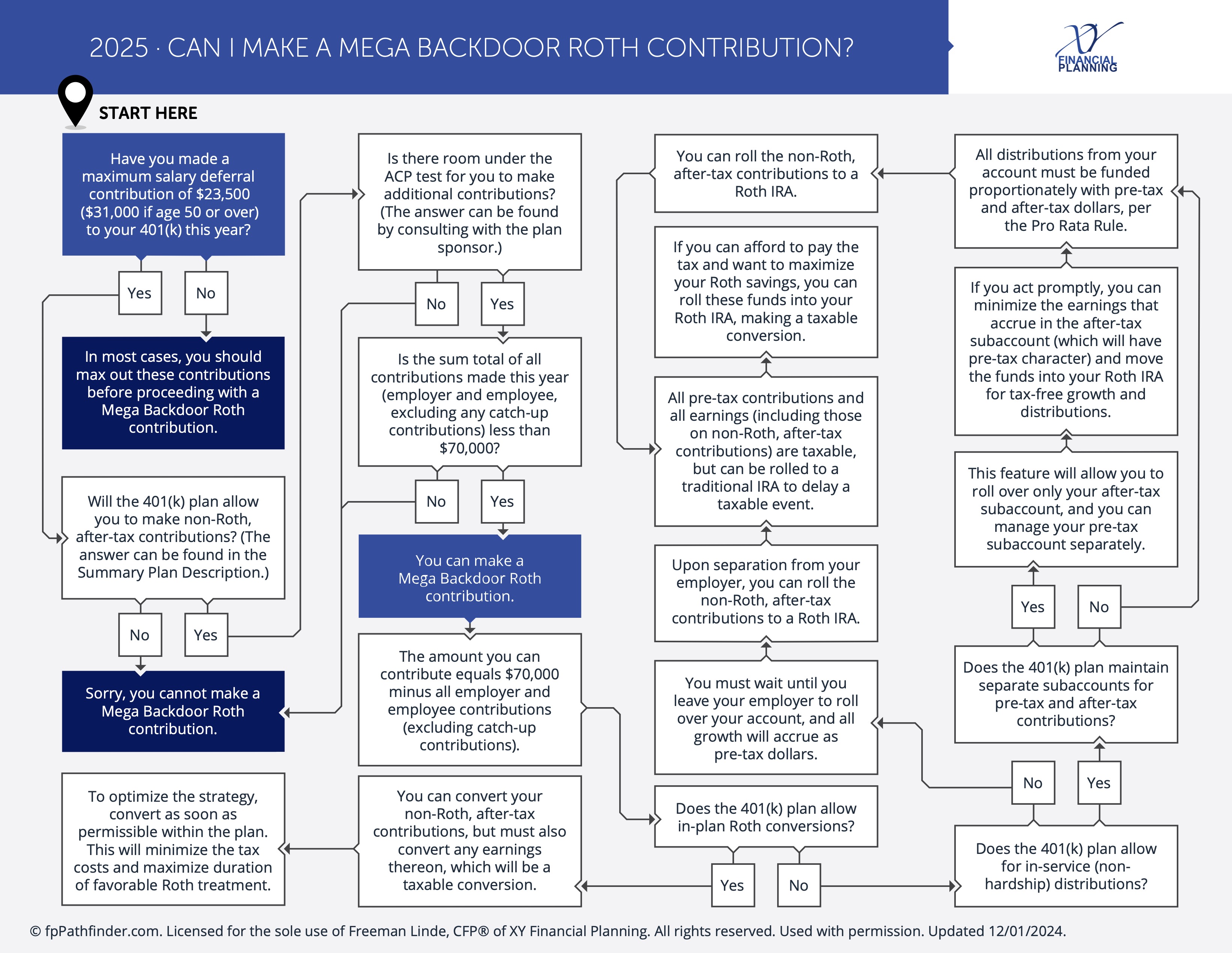
Can I Make A Mega Backdoor Roth Contribution? This flowchart will walk you through discovering your eligibility.
When it comes to retirement planning, individuals are always on the lookout for strategies that can supercharge their savings and provide tax advantages. One such strategy that has been gaining traction in recent years is the Mega Backdoor Roth Contribution. In this blog post, we’ll explore the ins and outs of this powerful retirement savings tool, answering the question: Can I Make A Mega Backdoor Roth Contribution?
Understanding Mega Backdoor Roth Contributions
Before delving into the specifics of Mega Backdoor Roth Contributions, let’s first understand what they entail. Essentially, a Mega Backdoor Roth Contribution is an advanced strategy that allows individuals to contribute additional funds to their Roth IRA beyond the standard contribution limits. This is achieved by leveraging certain provisions of employer-sponsored retirement plans, such as a 401(k) or 403(b).
How Does It Work?
The mechanics of a Mega Backdoor Roth Contribution involve several steps:
- Maximize Your 401(k) Contributions: The first step is to maximize your contributions to your employer-sponsored retirement plan, such as a 401(k). For 2022, the contribution limit stands at $20,500 for individuals under 50 and $27,000 for those 50 and older.
- Check Plan Provisions: Next, you’ll need to review the provisions of your employer-sponsored retirement plan to determine if it allows after-tax contributions and in-service withdrawals.
- Make After-Tax Contributions: If your plan permits after-tax contributions, you can contribute additional funds beyond the standard limits. For 2022, the total contribution limit, including employee and employer contributions, stands at $61,000 for individuals under 50 and $67,500 for those 50 and older.
- Convert to Roth IRA: Once you’ve made after-tax contributions to your employer-sponsored retirement plan, you can then initiate a conversion to a Roth IRA. This effectively moves the after-tax contributions into a Roth account, where they can grow tax-free and be withdrawn tax-free in retirement.
Benefits
There are several benefits to utilizing the Mega Backdoor Roth Contribution strategy:
- Tax-Free Growth: By converting after-tax contributions to a Roth IRA, you can enjoy tax-free growth on your investments. This can result in significant savings over the long term, especially if you expect to be in a higher tax bracket in retirement.
- Flexible Withdrawals: Unlike traditional retirement accounts, Roth IRAs offer more flexibility when it comes to withdrawals. You can withdraw your contributions at any time without penalty, providing a source of tax-free income in retirement.
- Estate Planning Benefits: Roth IRAs also offer estate planning benefits, as they are not subject to required minimum distributions (RMDs) during your lifetime. This means you can leave your Roth IRA to your heirs, who can then enjoy tax-free distributions over their lifetimes.
Considerations and Caveats
While Mega Backdoor Roth Contributions can be a powerful tool for retirement savings, there are some considerations to keep in mind:
- Plan Provisions: Not all employer-sponsored retirement plans allow after-tax contributions or in-service withdrawals. Be sure to check with your plan administrator to see if this strategy is available to you.
- Tax Implications: Converting after-tax contributions to a Roth IRA may trigger tax implications, especially if you have pre-tax funds in your traditional IRA. It’s essential to consult with a tax advisor to understand the potential tax consequences of a conversion.
In Conclusion
By leveraging this advanced retirement savings strategy, you can supercharge your savings, enjoy tax-free growth, and create a source of tax-free income in retirement. However, it’s essential to understand the rules and considerations associated with Mega Backdoor Roth Contributions to maximize their benefits effectively. As always, consulting with a financial advisor can help you navigate the complexities of retirement planning and make informed decisions about your financial future.
See more flowcharts here!
This article is educational only and is not intended to be investment, legal, or tax advice or recommendations, whether direct or incidental. Again, this is not investment advice. Consult your financial, tax, and legal professionals for specific advice related to your specific situation. Never take investment advice from someone who doesn’t know you and your specific situation. All opinions expressed in this article are those of the people expressing them. Any performance referenced is historical and is no guarantee of future results. All indices are unmanaged and may not be directly invested in.